
In a crowded digital marketplace, simply being visible is no longer enough. Businesses are competing for attention across search engines, social media, email, websites and countless other digital channels. The brands that stand out are the ones that communicate clearly, reach the right audience and turn marketing activity into measurable business results.
That is what it means to make an impact.
Effective marketing is not about making the most noise. It is about understanding your audience, delivering a strong message and building a strategy that moves people from awareness to action.
At Media Shoes, we believe successful digital marketing should connect creativity with strategy and measurable performance. Every campaign should have a purpose, every message should support a goal and every marketing decision should contribute to sustainable growth.
What Does It Mean to Make an Impact in Marketing?
Marketing impact is the difference between content that is simply seen and marketing that actually influences a decision.
A successful campaign should help the audience understand who you are, what you offer and why they should choose your business. More importantly, it should encourage them to take the next step.
Depending on the business, that action could include:
- Visiting a website
- Making an enquiry
- Requesting a quotation
- Downloading useful information
- Joining an email list
- Booking a consultation
- Purchasing a product or service
- Returning as a repeat customer
Marketing becomes valuable when attention turns into meaningful action.
Target Right: Start With the Right Audience
One of the biggest marketing mistakes businesses make is trying to communicate with everyone.
Even an excellent campaign can underperform if it reaches people who have little interest in the product or service being promoted.
Effective targeting begins with understanding your ideal customers. Businesses should consider who they are trying to reach, what problems those customers face, what motivates their decisions and where they spend their time online.
A strong audience strategy may consider factors such as:
- Customer demographics
- Geographic location
- Industry or business sector
- Interests and behaviours
- Search intent
- Previous interactions with the brand
- Customer challenges and priorities
- Position within the buying journey
The better a business understands its audience, the easier it becomes to create relevant campaigns.
Strong Targeting Reduces Wasted Marketing Spend
Reaching more people does not automatically produce better results.
Thousands of impressions from the wrong audience may generate less commercial value than a smaller campaign reaching people who genuinely need your services.
Better targeting helps businesses concentrate resources where they are more likely to generate meaningful engagement.
This can improve campaign efficiency while helping marketing teams understand which audiences, channels and messages produce the strongest response.
Message Strong: Communicate With Clarity
Once the right audience has been identified, the next challenge is communication.
Customers should not have to work hard to understand what a business offers.
A strong marketing message clearly explains the value of the product or service and gives the audience a reason to continue engaging.
Effective messaging usually answers several important questions:
- What does the business offer?
- Who is the service designed for?
- What problem does it solve?
- What makes the business different?
- Why should the customer care?
- What should they do next?
Clarity is particularly important online because potential customers often make decisions quickly. Confusing messaging creates friction. Clear messaging creates direction.
Build a Consistent Brand Message
A customer may discover a business through Google, visit its website, see a social media post and later receive an email before finally making an enquiry.
These interactions should feel connected.
Consistent branding, positioning and messaging help customers recognise the business and understand what it represents.
This does not mean repeating exactly the same content everywhere. Different platforms require different formats. However, the underlying brand identity and value proposition should remain consistent.
Consistency builds familiarity, and familiarity can contribute to greater confidence and trust.
Use Your Website as the Centre of Your Digital Strategy
For many businesses, the website is where marketing channels eventually converge.
A prospective customer might arrive through organic search, paid advertising, social media, email marketing, public relations or a referral. Once they reach the website, the experience needs to support the promise made by the campaign that brought them there.
An effective business website should provide:
- Clear positioning and messaging
- Simple navigation
- Strong service or product information
- Professional visual presentation
- Fast loading performance
- Mobile-friendly layouts
- Trust signals
- Clear calls to action
Driving traffic to a poor website can waste valuable marketing opportunities. The complete customer journey needs to work together.
Search Engine Optimisation Builds Long-Term Visibility
Search Engine Optimisation (SEO) helps businesses increase their visibility when potential customers actively search for relevant products, services or information.
Unlike interruption-based advertising, search often captures people at a moment when they are already looking for an answer.
A strong SEO strategy can involve:
- Keyword and search-intent research
- Technical website optimisation
- High-quality service pages
- Useful and authoritative content
- Internal linking
- Website performance improvements
- On-page optimisation
- Building authority over time
SEO is generally a long-term strategy, but strong organic visibility can become an important source of sustainable website traffic and enquiries.
Content Marketing Creates Authority
Good content should do more than fill a website or social media calendar.
It should answer questions, demonstrate expertise and help potential customers make better decisions.
Useful content might include educational articles, industry insights, guides, case studies, FAQs, videos and practical resources.
When businesses consistently provide genuinely useful information, content can support multiple areas of marketing at once.
It can strengthen SEO, provide material for social media, support email campaigns and demonstrate expertise to potential customers.
Social Media Should Support a Business Objective
Posting frequently is not the same as having a social media strategy.
Every platform and piece of content should have a reason for existing.
Some social content may be designed to increase awareness. Other content may educate an audience, demonstrate expertise, generate website visits or encourage enquiries.
A stronger social media strategy connects individual posts to broader marketing and commercial objectives.
Instead of asking only, “What should we post today?” businesses should also ask, “What do we want this content to achieve?”
Paid Advertising Can Accelerate Reach
Organic marketing builds long-term value, while paid advertising can provide businesses with faster access to targeted audiences.
Search advertising can help capture existing demand, while paid social campaigns can introduce products and services to carefully selected audiences.
However, effective advertising requires more than increasing the budget.
Performance depends on the combination of:
- Audience targeting
- Campaign objectives
- Creative quality
- Advertising copy
- Landing-page experience
- Conversion tracking
- Continuous testing and optimisation
The objective should not simply be generating clicks. The focus should be generating valuable business outcomes.
Turn Attention Into Leads
Traffic and engagement are useful indicators, but most businesses ultimately need marketing to generate commercial opportunities.
This is where conversion strategy becomes important.
Once someone reaches a website or landing page, the next step should be clear. Calls to action should guide visitors toward meaningful actions without creating unnecessary friction.
Examples might include:
- Request a quote
- Book a consultation
- Contact our team
- Download a guide
- Request more information
- Start a project
The easier it is for interested prospects to understand and complete the next step, the stronger the opportunity for marketing to generate results.
Grow Big: Turn Marketing Into a Growth System
Strong marketing is rarely created by one campaign or one channel.
Sustainable growth comes from building a connected system where different activities support each other.
For example, SEO can attract relevant visitors. Content can educate them. Social media can strengthen brand awareness. Paid campaigns can accelerate reach. Email can nurture relationships. A well-designed website can convert interest into enquiries.
When these channels work together, marketing becomes more consistent and scalable.
Measure the Metrics That Actually Matter
Modern marketing provides access to huge amounts of data. The challenge is identifying which information matters to the business.
Likes, impressions and website traffic can provide useful context, but they should not automatically be treated as success.
Depending on the campaign, more meaningful performance indicators may include:
- Qualified website traffic
- Conversion rate
- Cost per lead
- Number of enquiries
- Lead quality
- Customer acquisition cost
- Revenue generated
- Return on advertising spend
- Marketing return on investment
Measurement helps businesses understand what is working, what needs improvement and where future resources should be invested.
Analyse, Optimise and Improve
The strongest marketing strategies are not static.
Customer behaviour changes. Competitors change. Platforms change. Search behaviour changes. Successful businesses continually learn from performance and adapt accordingly.
Campaign optimisation may involve testing different headlines, audiences, creative formats, landing pages, calls to action or advertising strategies.
Small improvements across multiple areas can create significant improvements in overall performance over time.
Strategy Before Activity
One of the most important principles in effective digital marketing is simple: strategy should come before activity.
Businesses should understand what they want to achieve before selecting channels and creating campaigns.
A clear marketing strategy should connect:
- Business objectives
- Target audiences
- Brand positioning
- Core messaging
- Marketing channels
- Content strategy
- Lead generation
- Measurement and reporting
This creates direction and reduces disconnected marketing activity that consumes resources without contributing meaningfully to growth.
Make an Impact With Media Shoes
Effective marketing is about reaching the right people, communicating a strong message and creating a clear path toward business growth.
At Media Shoes Digital Solutions, we help businesses connect strategy, creativity, technology and performance to build marketing that has a clear purpose.
From digital strategy and SEO to content, social media, websites, paid advertising, lead generation and performance analysis, the objective is always the same: create marketing activity that supports meaningful commercial outcomes.
Because the goal is not simply to be seen.
The goal is to be remembered, generate action and make an impact.
Ready to Make a Bigger Impact?
Build a smarter digital strategy that targets the right audience, strengthens your message and turns marketing activity into measurable business growth.
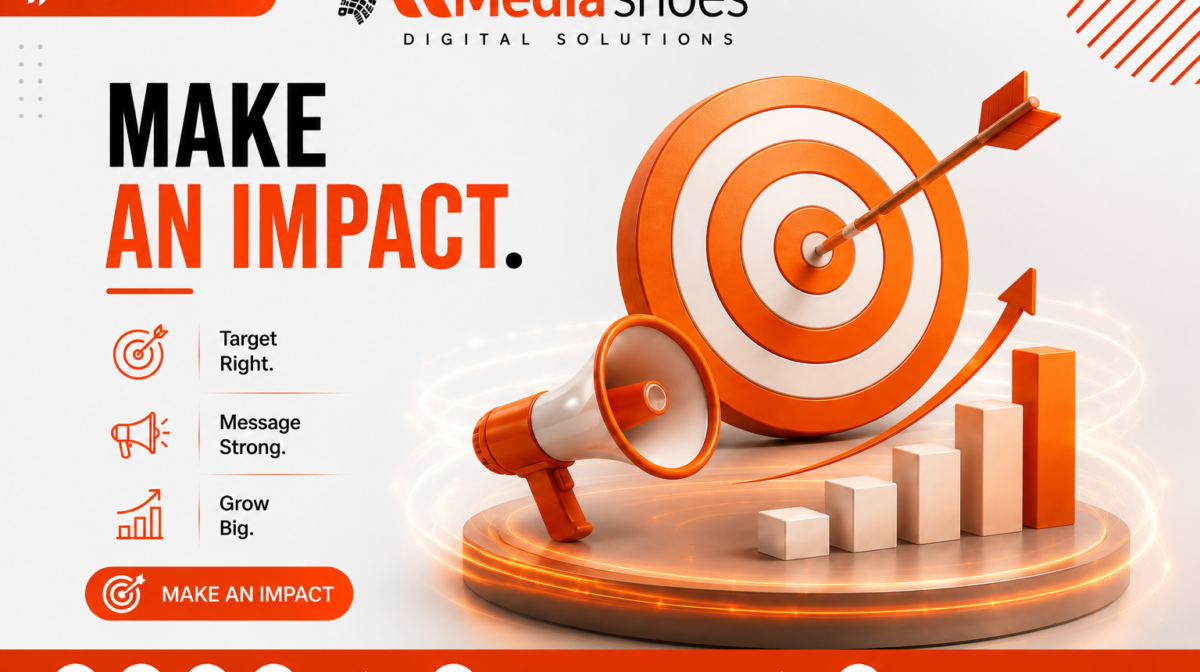
Target Right. Message Strong. Grow Big.
Frequently Asked Questions
What makes a digital marketing strategy effective?
An effective digital marketing strategy connects clear business objectives with the right audience, messaging, channels, content and measurable performance indicators.
Why is audience targeting important?
Better targeting helps businesses concentrate their marketing resources on people who are more likely to need their products or services, potentially improving campaign relevance and efficiency.
Should businesses use both SEO and paid advertising?
The right mix depends on individual objectives. SEO can support long-term organic visibility, while paid advertising can provide faster targeted exposure. Used strategically, the two can complement each other.
How should marketing success be measured?
Measurement should reflect the campaign objective. Businesses may monitor qualified traffic, enquiries, conversions, cost per lead, customer acquisition and revenue rather than relying only on visibility or engagement metrics.
How can Media Shoes help a business grow?
Media Shoes Digital Solutions can support businesses across digital strategy, website development, SEO, content marketing, social media, paid advertising, lead generation and performance-focused marketing activities.