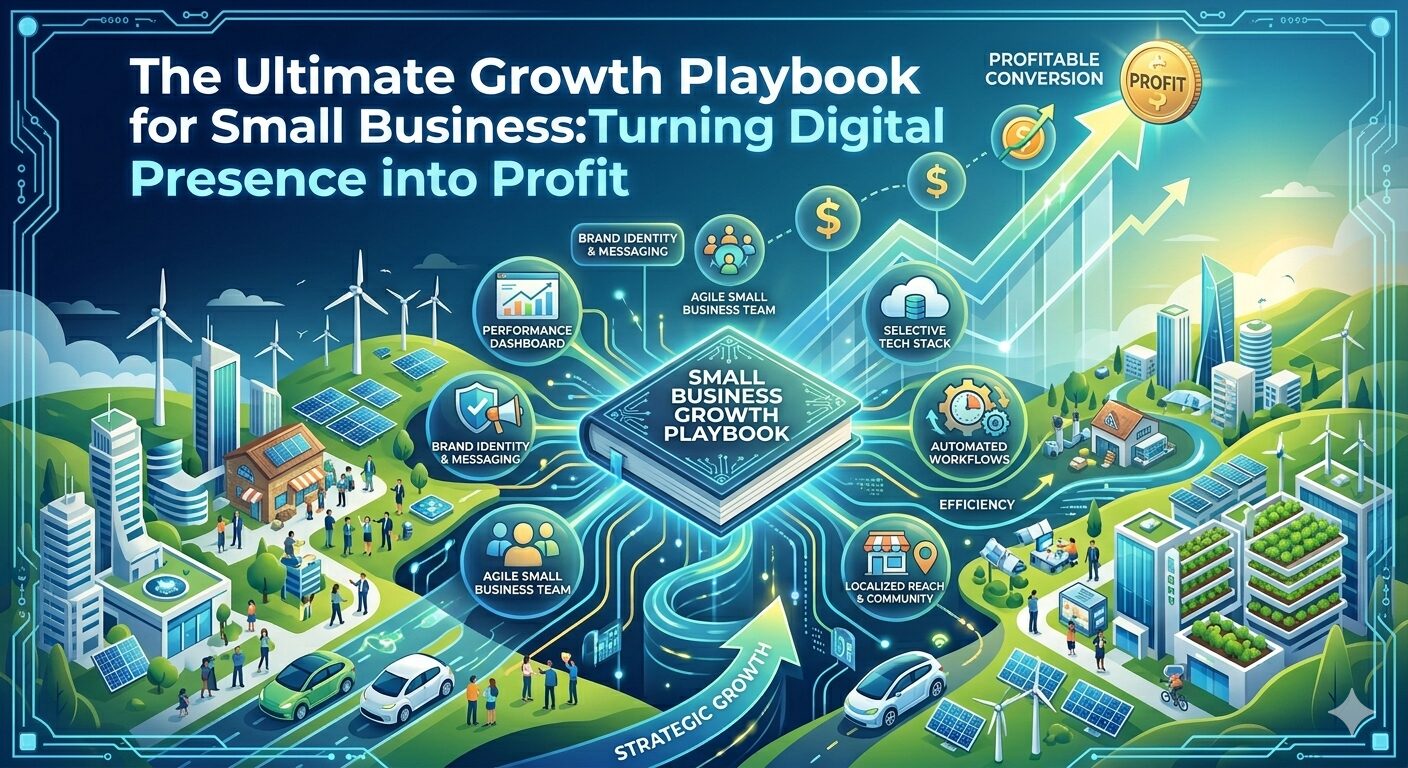
Introduction: Why Digital Growth Isn’t Optional
Today’s consumers don’t just discover brands — they experience them across multiple channels before ever making a purchase. Search engines, social media, direct communication, and visual branding work together to form perceptions, influence decisions, and shape loyalty.
For small businesses and emerging brands, digital channels level the playing field. But without an integrated and strategic approach, digital efforts become noise — failing to generate sustainable revenue.
Here’s the key: digital growth is not a tactic — it’s a system.
This article explores that system through the lenses of strategy, execution, and optimization — the three pillars that drive consistent outcomes.
Part I — The Foundation: Crafting a Growth‑Driven Digital Strategy
Every successful digital campaign begins with a strategy that reflects your business goals — not the latest fad or channel trend.
1. Define Clear Business Objectives
Before anything else, articulate what success looks like in measurable terms. Ask:
- Do you want to increase brand awareness?
- Is the goal to generate leads or complete direct sales?
- Are you preparing for long‑term positioning or immediate revenue?
These goals define your Key Performance Indicators (KPIs) — the metrics that matter. For example:
- 20% increase in organic traffic in 6 months
- 15% boost in lead‑to‑customer conversion rate
- 50% growth in targeted social engagement
Without clear outcomes, digital efforts become a scattershot of activity with no measurable progress.
2. Know Your Audience (Before Targeting Anyone)
Many businesses jump into SEO or social ads without understanding their customers. Effective targeting begins with a precise buyer persona:
- Demographics: age, location, job role, interests
- Digital behavior: preferred platforms, search patterns
- Purchase motivations and barriers
This insight influences SEO keywords, social messaging, content topics, and design aesthetics.
Part II — Pillar One: Strategic SEO for Long‑Term Visibility
Search Engine Optimization (SEO) remains the backbone of sustainable discovery. But more than ranking high for keywords, SEO builds brand authority and drives qualified traffic — people actively searching for what you offer.
1. Technical Health: The Foundation of SEO
Your website must be crawlable, fast, and secure:
- Site speed optimization
- Mobile‑friendly design
- Structured URLs and clean navigation
- Secure HTTPS setup
If search engines can’t index your content efficiently, you’ll never compete for organic visibility.
2. Content That Answers Real Queries
Content should solve problems, not just fill space. Create pages that answer common questions your audience searches for. Use keyword research to determine search intent — whether it’s informational, transactional, or navigational.
Each content piece should:
- Satisfy the user’s intent
- Be well‑structured with clear headings
- Include enriched meta titles and descriptions
- Use internal linking to reinforce topical authority
High‑quality content is the catalyst that turns organic visibility into meaningful engagement.
3. Backlinks and Authority Signals
Backlinks from credible websites are one of the strongest ranking signals — not because they’re “popular,” but because they validate your site’s expertise and trustworthiness.
Focus on:
- Industry‑relevant directory listings
- Guest posts on authoritative blogs
- Brand mentions in press and niche publications
A thoughtful link strategy strengthens your domain and expands your reach.
4. Monitoring and Iteration
SEO isn’t a set‑and‑forget task. Use analytics tools to:
- Track keyword ranking changes
- Monitor organic traffic trends
- Analyze conversion paths
Consistent monitoring allows you to optimize pages that underperform and capitalize on high‑opportunity topics.
Part III — Pillar Two: Social Media & Community Engagement
With billions of active users on platforms like Facebook, Instagram, and LinkedIn, social media can be an effective channel for building trust and driving conversions — if done strategically.
1. Choose Platforms Based on Audience Behavior
Not all social channels are equal for every business:
- LinkedIn for B2B connections and professional engagement
- Instagram and Facebook for visual branding and e‑commerce interaction
- TikTok for trend‑driven storytelling and brand discovery
Your choice should reflect where your audience spends time and how they prefer to engage.
2. Content Calendars and Consistency
Consistency builds momentum. Create a structured content calendar that maps:
- Posting frequency
- Content themes (educational, promotional, behind‑the‑scenes)
- Engagement goals (likes, comments, shares)
Plan content around business priorities — product launches, seasonal campaigns, or community engagement activities.
3. Engagement Over Followers
A large follower count does not equate to influence. Engagement — likes, comments, shares, saves — indicates resonance. Focus on:
- Responding to comments and messages promptly
- Encouraging user‑generated content
- Hosting live Q&A sessions or interactive polls
Communities engage with stories, not broadcasts.
4. Paid Social Campaigns That Drive Action
Organic reach is limited. Paid social complements your strategy by targeting users with precision.
Effective paid campaigns focus on:
- Narrowed audience segments
- Clear conversion goals (e.g., website visit to lead)
- Messaging tailored to where the audience is in the funnel
Matching creative to audience intent increases value per impression and boosts ROI.
Part IV — Pillar Three: Direct Mail and Offline Integration
Digital marketing is essential — but combining it with direct mail can break through the noise.
1. Why Direct Mail Still Works
In a world saturated with digital ads, physical mail stands out. Its tactile nature leads to:
- Higher response rates
- Better memory retention
- Complementary reinforcement of digital campaigns
Examples include postcards with promotional codes, brochures highlighting case studies, or personalized letters to past clients.
2. Integrating Offline and Online Messaging
Sync messaging across channels:
- Use QR codes directing recipients to landing pages
- Retarget direct mail recipients with digital ads
- Personalize email follow‑ups based on direct mail interactions
Integration enhances the customer journey and increases conversions.
Part V — Branding & Design: The Visual Identity of Growth
Branding is not merely aesthetics — it’s how your business is perceived at every touchpoint.
1. Logo and Visual Identity
Your logo anchors visual identity. But beyond logo design, cohesive brand elements include:
- Color palettes
- Typography systems
- Image styles and iconography
Consistent branding builds familiarity — which in turn builds trust.
2. Messaging that Resonates
Strong design without clear messaging is like a billboard with no headline. Effective messaging:
- Addresses audience pain points
- Clearly states value propositions
- Uses language your customers understand
Messages should be consistent across website, social, and printed materials.
3. Website Experience as a Conversion Machine
Your website should be more than an online brochure — it must
- Guide users toward action
- Address objections early
- Provide clear calls‑to‑action
A performant website integrates compelling design with strategic content to convert visitors into customers.
Part VI — Analytics and Continuous Improvement
No marketing strategy succeeds without data. Analytics helps you:
- Identify which campaigns generate revenue
- Spot bottlenecks in the conversion process
- Allocate budget to high‑performing channels
Review metrics weekly, refine messaging and offers, and optimize based on evidence — not assumptions.
Conclusion: A Growth Framework for Small Businesses
The core of digital growth lies not in chasing trends, but in building strategic systems that convert visibility into value. Small businesses that integrate SEO, social engagement, offline channels like direct mail, and consistent branding outperform competitors who treat these as isolated tactics.
Here’s a simple checklist to implement immediately:
✔ Clarify objectives and KPIs
✔ Build SEO with a content and technical focus
✔ Engage audiences where they spend time
✔ Blend digital and direct communication strategies
✔ Ensure cohesive branding and messaging
✔ Use analytics to optimize and adapt
Implementing these principles gives your business not only visibility — but measurable growth.