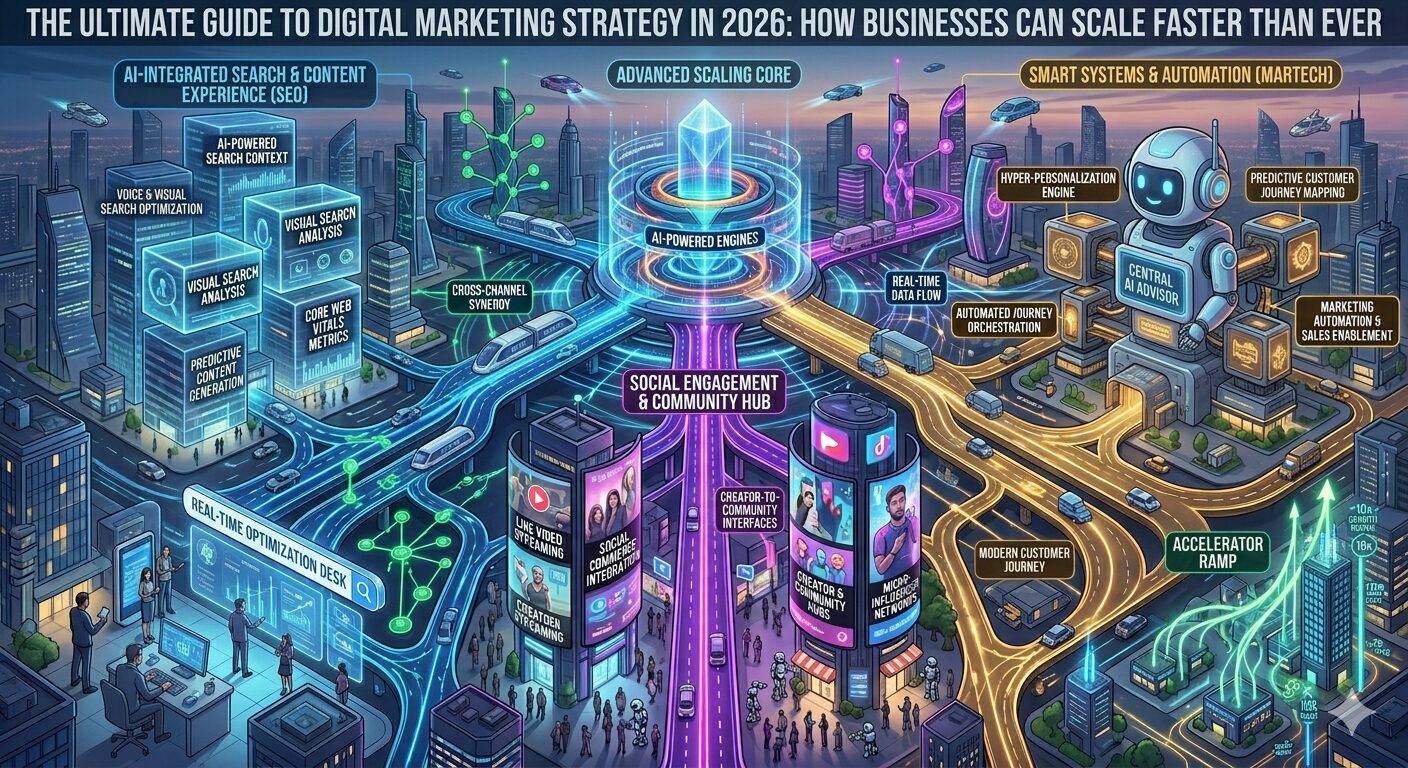
Introduction
In today’s hyper-competitive digital landscape, businesses can no longer rely on guesswork or outdated tactics. Growth is no longer about simply “being online”—it’s about being strategically visible, consistently engaging, and measurably effective.
As we move into 2026, digital marketing has evolved into a performance-driven ecosystem where every click, impression, and conversion matters. Businesses that succeed are those that combine data, creativity, and execution into a unified strategy.
This guide breaks down exactly how modern digital marketing works—and how your business can leverage it to scale faster, smarter, and more efficiently.
What Is a Digital Marketing Strategy?
A digital marketing strategy is a structured plan that outlines how a business will:
- Attract its target audience
- Convert visitors into customers
- Retain and grow customer relationships
- Maximize return on investment (ROI)
Unlike random marketing activities, a strategy ensures every effort is aligned with business goals.
Key Components of a Strong Strategy
- Audience Research
- Channel Selection (SEO, social, ads, etc.)
- Content Planning
- Conversion Optimization
- Performance Tracking
Without these elements, marketing becomes inconsistent—and inconsistent marketing does not scale.
Why Digital Marketing Matters More Than Ever in 2026
The modern consumer journey has changed dramatically. Buyers now:
- Research extensively before purchasing
- Compare multiple brands online
- Expect personalized experiences
- Trust content over advertisements
This shift means businesses must meet customers where they are—online—and with value-driven content.
Key Trends Driving Digital Marketing Growth
1. Data-Driven Decision Making
Marketing is no longer based on assumptions. Analytics tools allow businesses to track:
- User behavior
- Conversion rates
- Campaign performance
2. Personalization at Scale
Customers expect tailored experiences. From emails to ads, personalization increases engagement and conversions.
3. Multi-Channel Presence
Success requires visibility across multiple platforms:
- Search engines
- Social media
- Email marketing
- Paid advertising
4. Content Dominance
Content remains the backbone of digital marketing. High-quality, SEO-optimized content drives long-term growth.
Search Engine Optimization (SEO): The Foundation of Online Visibility
SEO is one of the most powerful long-term strategies for business growth.
What Makes SEO Effective?
- Keyword optimization
- High-quality content
- Technical website performance
- Backlink building
When implemented correctly, SEO helps businesses:
- Rank higher on search engines
- Attract organic traffic
- Build credibility and trust
On-Page vs Off-Page SEO
On-Page SEO Includes:
- Content optimization
- Meta tags
- Internal linking
Off-Page SEO Includes:
- Backlinks
- Brand mentions
- Authority building
Why SEO Delivers Long-Term ROI
Unlike paid ads, SEO continues to generate traffic over time. It’s an investment that compounds.
Social Media Marketing: Building Brand Authority
Social media is no longer optional—it’s essential.
Why Social Media Matters
- Builds brand awareness
- Engages audiences directly
- Drives traffic to your website
- Supports customer relationships
Platforms That Drive Results
- LinkedIn (B2B growth)
- Instagram (visual branding)
- Facebook (community building)
- Twitter/X (real-time engagement)
What Works in 2026
- Consistent posting
- Short-form video content
- Storytelling and authenticity
- Data-backed content strategies
Paid Advertising: Scaling Growth Quickly
While organic strategies take time, paid advertising delivers immediate results.
Types of Paid Advertising
- Google Ads (Search & Display)
- Social Media Ads
- Retargeting Campaigns
Benefits of Paid Ads
- Instant visibility
- Precise audience targeting
- Scalable campaigns
- Measurable performance
The Role of Retargeting
Most users don’t convert on the first visit. Retargeting brings them back, increasing conversion rates significantly.
Content Marketing: The Engine of Engagement
Content marketing is what connects your brand with your audience.
Types of High-Performing Content
- Blog articles
- Case studies
- Videos
- Infographics
- Email newsletters
What Makes Content Effective?
- Relevance to audience needs
- SEO optimization
- Clear messaging
- Strong call-to-action (CTA)
Content + SEO = Growth
When content is optimized for search engines, it becomes a powerful traffic driver.
Conversion Optimization: Turning Traffic into Revenue
Traffic alone does not generate revenue—conversions do.
What Is Conversion Rate Optimization (CRO)?
CRO focuses on improving the percentage of visitors who take action, such as:
- Making a purchase
- Filling out a form
- Booking a consultation
Key CRO Techniques
- Clear CTAs
- Fast-loading pages
- Mobile optimization
- A/B testing
Why CRO Is Critical
Even small improvements in conversion rates can lead to significant revenue growth.
The Role of Branding in Digital Marketing
Branding is more than just a logo—it’s how your business is perceived.
Strong Branding Includes:
- Consistent visual identity
- Clear messaging
- Emotional connection with audience
Why Branding Matters
- Builds trust
- Differentiates from competitors
- Increases customer loyalty
Analytics and Performance Tracking
Modern marketing is measurable.
Key Metrics to Track
- Website traffic
- Conversion rate
- Cost per lead
- Return on investment (ROI)
Tools for Analytics
- Google Analytics
- Search Console
- Social media insights
Why Data Matters
Data helps businesses:
- Identify what works
- Eliminate what doesn’t
- Optimize campaigns continuously
Common Digital Marketing Mistakes to Avoid
Even strong businesses make critical mistakes.
1. Lack of Strategy
Random marketing efforts lead to inconsistent results.
2. Ignoring SEO
Without SEO, long-term visibility suffers.
3. Poor Content Quality
Low-quality content damages credibility.
4. No Performance Tracking
Without data, improvement is impossible.
5. Inconsistent Branding
Mixed messaging confuses customers.
How to Build a Winning Digital Marketing Strategy
Step 1: Define Your Goals
- Lead generation
- Brand awareness
- Sales growth
Step 2: Understand Your Audience
- Demographics
- Behavior
- Pain points
Step 3: Choose the Right Channels
Focus on platforms where your audience is active.
Step 4: Create High-Quality Content
Content should educate, inform, and convert.
Step 5: Measure and Optimize
Continuously improve based on performance data.
The Future of Digital Marketing
Digital marketing will continue to evolve rapidly.
What to Expect
- Increased use of AI and automation
- More personalized user experiences
- Greater focus on data privacy
- Expansion of video content
Businesses that adapt early will gain a competitive advantage.
Why Businesses Need a Strategic Partner
Managing digital marketing in-house can be complex and time-consuming.
A strategic partner helps:
- Develop data-driven strategies
- Execute campaigns effectively
- Track and optimize performance
- Deliver measurable growth
This is where agencies like MediaShoes position themselves—combining SEO, social media, and design into a unified growth system.
Conclusion
Digital marketing in 2026 is not about doing more—it’s about doing things smarter.
Businesses that succeed will:
- Focus on strategy over tactics
- Use data to guide decisions
- Invest in long-term growth channels
- Prioritize customer experience
Whether you’re a startup or an established brand, the opportunity is massive—but only if you approach it with the right strategy.
Final Thought
Growth doesn’t happen by chance. It happens by design.
If your business is ready to scale, now is the time to build a digital marketing strategy that delivers real, measurable results.