Growth Needs Systems: How Scalable Digital Systems Turn Marketing Into Measurable Business Growth
Business growth does not happen through creativity alone. Strong ideas are important, but ideas need structure, direction, execution, and measurement to create real results. Many businesses invest in marketing, content, design, advertising, and online visibility, but still struggle to turn that activity into consistent growth. The reason is simple: growth needs systems.
Mediashoes Digital Solutions helps businesses create scalable digital systems that bring structure to creativity, streamline delivery, and turn marketing momentum into measurable business growth. When marketing is supported by the right systems, every campaign becomes easier to manage, every decision becomes clearer, and every result becomes easier to improve.
In a competitive digital market, businesses cannot rely on random posting, disconnected tools, unclear workflows, or guesswork. They need structured workflows, scalable processes, data-driven decisions, and consistent growth strategies that support long-term success.
Why Growth Needs Systems
Many businesses want growth, but not every business is ready to manage growth. Without systems, marketing can quickly become messy. Tasks get delayed, responsibilities become unclear, campaigns lose direction, and results become difficult to measure. A business may be active online, but activity alone does not guarantee progress.
Systems create order. They help teams understand what needs to happen, when it needs to happen, who is responsible, and how success will be measured. This is what turns marketing from scattered activity into a repeatable growth process.
A strong digital system helps businesses:
- Organise marketing tasks and campaign workflows.
- Create clear roles and responsibilities.
- Track leads, conversions, and performance.
- Improve communication between teams.
- Make better decisions using data.
- Build consistent growth instead of short-term momentum.
When systems are built properly, marketing becomes easier to manage and more effective over time.
The Problem with Unstructured Marketing
Many businesses work hard on marketing but still feel stuck. They may post on social media, run ads, update their website, send emails, or create content, but they do not always have a clear system behind these actions. Without structure, marketing can become reactive instead of strategic.
Unstructured marketing often leads to problems such as:
- Inconsistent posting and campaign delivery.
- Poor follow-up with leads and enquiries.
- Confusing customer journeys.
- Weak reporting and unclear performance data.
- Missed opportunities due to slow execution.
- Marketing decisions based on assumptions instead of evidence.
- Difficulty scaling because everything depends on manual effort.
These challenges can limit growth even when the business has strong products, services, or creative ideas. To grow consistently, marketing needs a system that supports strategy, execution, and improvement.
What Are Scalable Digital Systems?
Scalable digital systems are organised tools, workflows, and processes that help a business manage marketing, sales, customer communication, automation, reporting, and growth more efficiently. They are designed to support the business now while also preparing it for future expansion.
A scalable digital system may include:
- Marketing dashboards.
- Lead capture workflows.
- Automation sequences.
- Campaign planning systems.
- Performance analytics.
- Customer relationship management tools.
- Content calendars.
- Conversion tracking.
- Reporting processes.
The goal is not to make marketing more complicated. The goal is to make marketing clearer, faster, and more measurable.
Structured Workflows Bring Clarity to Marketing
One of the biggest benefits of digital systems is workflow structure. A structured workflow gives every task a clear path. It shows what needs to happen first, what comes next, and how work moves from idea to delivery.
For example, a marketing campaign may include research, strategy, design, copywriting, approval, publishing, tracking, reporting, and optimisation. Without a workflow, these steps can become confusing. With a workflow, the process becomes clear and repeatable.
Structured workflows help businesses:
- Reduce delays in campaign delivery.
- Keep teams aligned on priorities.
- Ensure every step is completed properly.
- Improve accountability across departments.
- Maintain quality and consistency.
- Create a smoother customer experience.
Clear steps create better execution. When everyone knows the process, work becomes easier to manage and results become more consistent.
Scalable Processes Support Business Growth
A process that works for a small business today may not work when the business grows. As enquiries increase, projects expand, customers multiply, and campaigns become more complex, the business needs systems that can handle more activity without breaking down.
Scalable processes allow a business to grow without losing control. They help teams manage more work while still maintaining quality, speed, and consistency.
Scalable processes are important because they help businesses:
- Handle more leads and customers efficiently.
- Deliver campaigns with less confusion.
- Reduce dependency on one person doing everything.
- Maintain quality as workload increases.
- Build repeatable systems that support future growth.
Growth becomes easier when the business does not need to reinvent the process every time. A strong system makes successful actions repeatable.
Data-Driven Decisions Create Smarter Marketing
Marketing without data is guesswork. Businesses may think a campaign is working, but without proper tracking, they cannot know which channels are producing results, which messages are converting, or where improvement is needed.
Data-driven decisions help businesses understand what is actually happening. Instead of relying on opinions, they can use performance insights to guide strategy and execution.
Important marketing data may include:
- Website traffic.
- Lead generation numbers.
- Conversion rates.
- Campaign performance.
- Top-performing channels.
- Customer engagement.
- Audience growth.
- Revenue impact.
When this information is organised in a clear dashboard or reporting system, businesses can make smarter decisions. They can invest more in what works, improve what is weak, and stop wasting time on activities that do not support growth.
Consistent Growth Comes from Repeatable Systems
Short-term marketing success is useful, but long-term business growth requires consistency. A single campaign may bring attention, but a system helps the business build momentum again and again.
Consistent growth comes from repeatable actions. This means having a clear strategy, a reliable workflow, measurable goals, and ongoing optimisation.
Repeatable systems help businesses:
- Launch campaigns more efficiently.
- Follow up with leads more effectively.
- Track performance every month.
- Improve customer journeys.
- Build trust through consistent brand activity.
- Create long-term marketing momentum.
When growth is supported by systems, it becomes easier to maintain and improve.
How Digital Systems Improve Lead Management
Generating leads is only the first step. Businesses also need a system for managing those leads properly. Without lead management, potential customers may be missed, forgotten, or followed up too late.
A strong lead management system helps businesses capture, qualify, nurture, and convert leads in a more organised way.
A typical lead journey may include:
- Lead Captured: A visitor fills out a form, books a call, or sends an enquiry.
- Qualified Lead: The business reviews whether the lead is relevant and ready.
- Nurture: The lead receives helpful communication and follow-up.
- Convert: The lead becomes a customer or client.
- Retain and Grow: The relationship continues through service, support, and future opportunities.
This type of system helps businesses avoid lost opportunities and create a smoother path from interest to conversion.
Automation Helps Businesses Save Time
Automation is one of the most powerful parts of modern digital systems. It helps businesses reduce repetitive manual work and keep important actions moving automatically.
Automation can support many areas of marketing and business growth, including:
- Email follow-ups.
- Lead notifications.
- Campaign reminders.
- Customer onboarding.
- Appointment confirmations.
- Reporting updates.
- Task assignments.
Automation does not replace strategy or human creativity. It supports them. By handling repetitive tasks, automation gives teams more time to focus on planning, communication, creative work, and customer relationships.
Better Execution Creates Higher Quality
Execution is where many marketing plans fail. A business may have a good idea, but if the execution is slow, unclear, or inconsistent, the result will be weaker. Better execution means turning plans into action with speed, quality, and structure.
Digital systems improve execution by making the process easier to follow. Teams can see what needs to be done, who is responsible, and when the work should be completed.
Better execution helps businesses:
- Deliver campaigns faster.
- Maintain consistent branding.
- Reduce mistakes and missed steps.
- Improve communication between team members.
- Turn ideas into published work more efficiently.
When execution improves, marketing becomes more dependable and professional.
Higher Conversions Come from Optimised Journeys
Getting attention is only one part of marketing. The real goal is to turn interest into action. That action may be a sale, booking, enquiry, consultation, download, or sign-up. To achieve higher conversions, businesses need an optimised customer journey.
An optimised journey helps guide people from awareness to decision. It removes confusion and makes it easier for potential customers to take the next step.
Conversion-focused systems may improve:
- Landing page performance.
- Call-to-action placement.
- Email follow-up timing.
- Lead nurturing sequences.
- Customer segmentation.
- Campaign targeting.
- Sales communication.
When the journey is clear, people are more likely to move forward.
Stronger Branding Comes from Consistency
A strong brand is not built by one post, one campaign, or one design. It is built through repeated consistency. Customers begin to trust a business when its message, visuals, tone, and delivery feel professional across every channel.
Digital systems help protect brand consistency by creating structure around content, campaigns, approvals, and communication.
Brand consistency includes:
- Consistent visual identity.
- Clear messaging.
- Professional content standards.
- Reliable publishing schedules.
- Consistent customer communication.
- A unified experience across platforms.
When branding is consistent, the business becomes easier to recognise and trust.
Why Marketing Dashboards Are Important
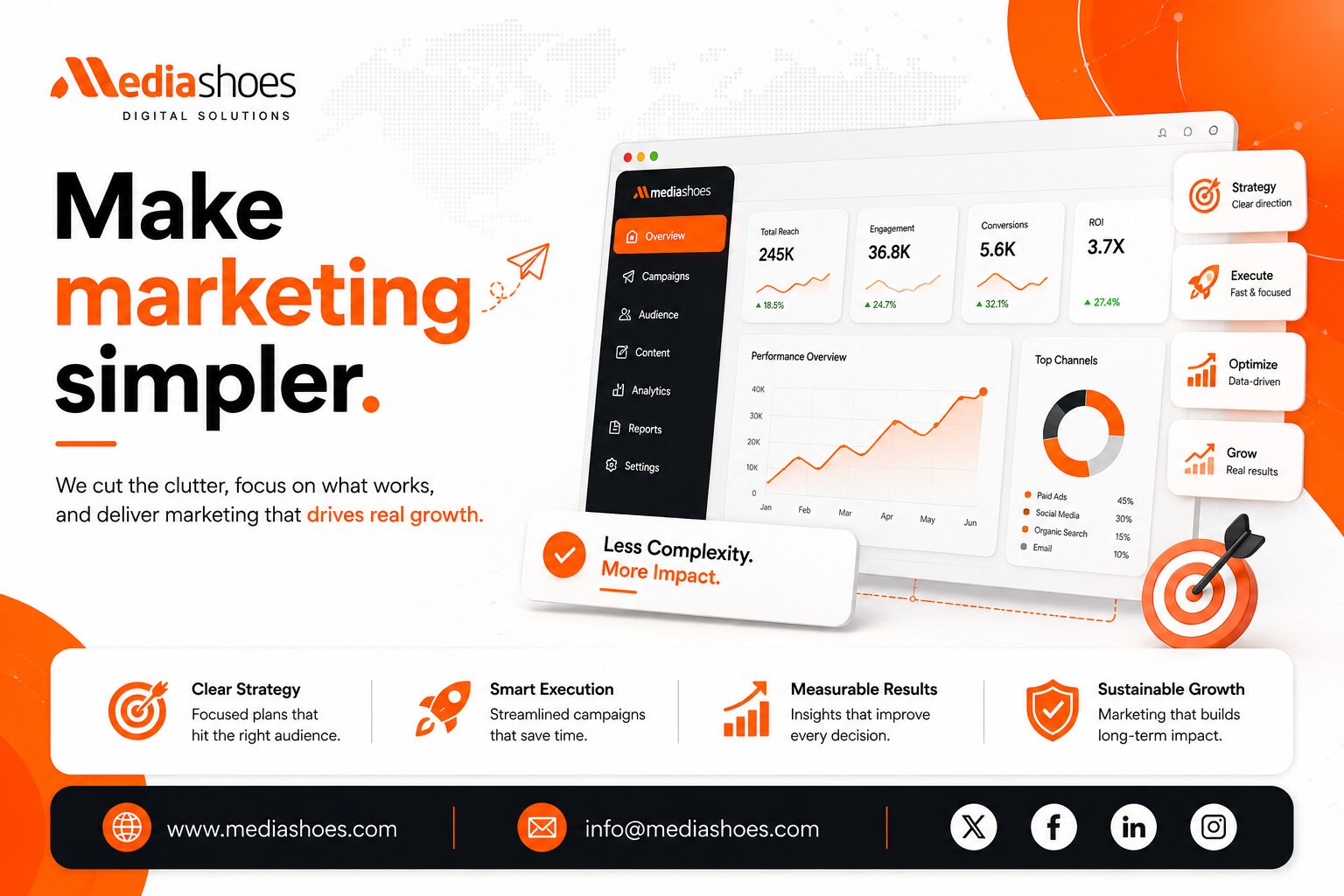
A marketing dashboard gives businesses a clear view of performance. Instead of searching through different tools or guessing what is happening, teams can view important numbers in one place.
A useful dashboard may show:
- Total leads.
- Conversion rates.
- Revenue growth.
- Active projects.
- Campaign performance.
- Top channels.
- Audience growth.
- Recent activity.
Dashboards make performance easier to understand. They help business owners and marketing teams see progress clearly and make better decisions faster.
The Connection Between Creativity and Structure
Some businesses worry that systems may reduce creativity. In reality, the right systems protect creativity by giving it a clearer path to execution. Creative ideas become more powerful when they are organised, delivered, tracked, and improved.
Creativity without structure can become inconsistent. Structure without creativity can feel flat. The best marketing combines both.
A strong digital system allows creative teams to:
- Plan better campaigns.
- Organise ideas more clearly.
- Collaborate with less confusion.
- Deliver work more consistently.
- Measure which creative ideas perform best.
This balance helps businesses create marketing that is both beautiful and effective.
Common Signs Your Marketing Needs Better Systems
Many businesses do not realise they need better systems until the problems become obvious. However, there are clear signs that marketing may need more structure.
- Campaigns are delayed or inconsistent.
- Leads are not followed up quickly.
- Reports are unclear or difficult to understand.
- Team members are unsure who is responsible for each task.
- Marketing feels busy but not strategic.
- Content is created without a clear plan.
- Customer journeys are not properly tracked.
- Growth depends too heavily on manual effort.
If these challenges are present, the solution is not always to do more marketing. Often, the solution is to build better marketing systems.
How Mediashoes Digital Solutions Supports Business Growth
Mediashoes Digital Solutions focuses on helping businesses build marketing and digital systems that support measurable growth. The goal is to create structure around creativity, streamline delivery, and help businesses grow with clarity.
This approach includes:
- Structured Workflows: Clear steps, defined roles, and seamless delivery.
- Scalable Processes: Systems that grow with the business.
- Data-Driven Decisions: Insights that guide strategy and performance.
- Consistent Growth: Compound momentum built through sustainable systems.
By combining strategy, process, technology, and analytics, Mediashoes helps businesses move from scattered marketing activity to organised digital growth.
Best Practices for Building Scalable Marketing Systems
Businesses that want to build stronger marketing systems should focus on practical steps that improve clarity, execution, and measurement.
1. Define Your Marketing Goals
Before building systems, understand what you want to achieve. Goals may include more leads, higher conversions, stronger brand awareness, better customer retention, or improved campaign performance.
2. Map Your Customer Journey
Identify how people discover your business, how they engage, what questions they have, and what steps they take before becoming customers.
3. Create Clear Workflows
Define how campaigns are planned, created, approved, launched, and measured. Clear workflows reduce confusion and improve delivery.
4. Use Automation Carefully
Automate repetitive tasks such as follow-ups, reminders, and notifications, but keep the customer experience personal and helpful.
5. Track the Right Metrics
Focus on numbers that matter, such as leads, conversion rates, customer acquisition cost, campaign performance, and revenue impact.
6. Review and Improve Regularly
Systems should not stay static. Review performance regularly and improve workflows based on data and feedback.
Why Scalable Systems Create Long-Term Advantage
Businesses that build scalable systems gain an advantage because they can grow with more control. They are not relying only on random effort or temporary campaigns. They have a structure that supports repeatable progress.
Scalable systems help businesses become more professional, more efficient, and more prepared for future opportunities. They also make marketing easier to manage as the business grows.
Long-term advantages include:
- More organised marketing execution.
- Better customer follow-up.
- Clearer performance insights.
- Improved brand consistency.
- Stronger conversion opportunities.
- More sustainable business growth.
Final Thoughts
Growth needs systems because modern marketing is too important to leave to chance. Creativity, content, design, automation, analytics, and customer communication all need structure to create meaningful results.
Mediashoes Digital Solutions helps businesses create scalable digital systems that bring order to marketing and turn momentum into measurable growth. With structured workflows, scalable processes, data-driven decisions, and consistent growth strategies, businesses can move with more confidence and achieve stronger outcomes.
If your marketing feels busy but not clear, active but not measurable, or creative but not consistent, it may be time to build better systems. The right digital systems can help your business grow smarter, execute faster, and build a stronger brand for the future.
Build Smarter Digital Systems for Growth
If your business is ready to streamline marketing, improve execution, and create measurable growth, Mediashoes Digital Solutions can help you build the systems needed for long-term success.
Website: www.mediashoes.com
Email: info@mediashoes.com