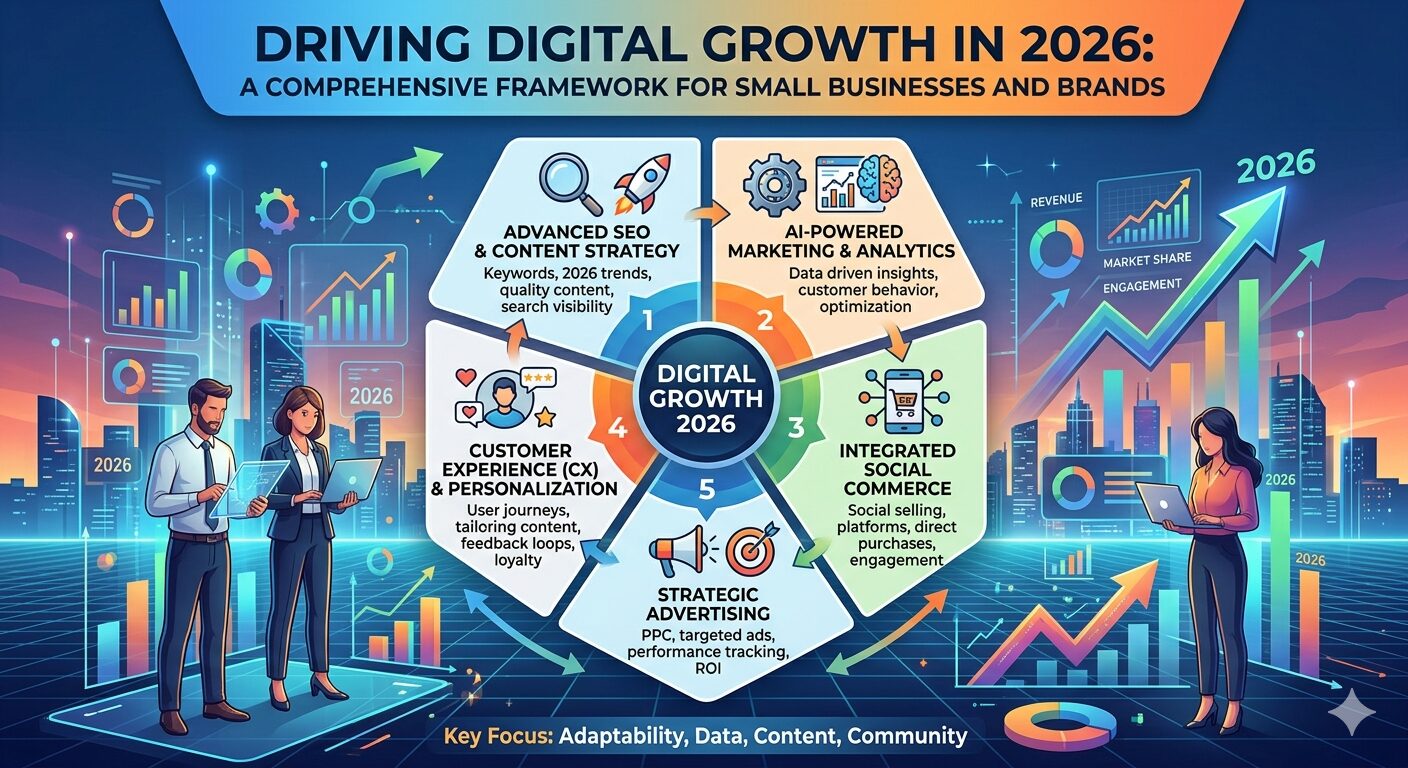
Introduction: Digital Marketing Is Now Table Stakes
In today’s highly competitive digital economy, having an online presence isn’t enough — businesses must strategically activate that presence to grow revenue, build authority, and strengthen customer relationships. For small businesses and brands, especially those with limited resources, choosing the right mix of digital marketing initiatives can be complex.
This article presents a comprehensive framework that helps you turn digital visibility into measurable growth, combining SEO, social media strategy, paid advertising, direct outreach, and branding into a unified system. With actionable insights and real‑world examples, this guide ensures you build a digital strategy that drives results in 2026 and beyond.
1. Start With Strategic Goals, Not Channels
Most businesses begin digital marketing by choosing platforms — Facebook, Instagram, Google Ads — without first clarifying what success looks like. Strategic digital growth begins with clear objectives.
Define Growth Metrics Before Anything Else
Before developing campaigns, answer these core questions:
- What outcome matters most? Increase sales, lead quality, website conversions, or brand awareness?
- What is the timeline for success? 3, 6, or 12 months?
- Which audiences matter most? Local customers, national markets, or international buyers?
Setting specific, measurable targets — such as a 30% increase in organic leads within six months — gives direction to every tactic that follows.
2. SEO: The Foundation of Sustainable Online Discovery
Search Engine Optimization (SEO) remains the backbone of digital visibility. Unlike paid campaigns that stop delivering traffic when the budget ends, SEO builds long‑term authority and attracts qualified visitors actively searching for solutions you offer.
Technical SEO: Clean, Fast, Accessible
Technical optimization ensures search engines can index your site efficiently. Key aspects include:
- Mobile responsiveness
- Fast page load speeds
- Secure HTTPS setup
- Structured site architecture
Without these fundamentals, even the best content and keywords won’t rank effectively.
Content SEO: Answer Questions, Capture Intent
Content must align with user intent — what people are searching for and why they’re searching. There are three main types of intent:
- Informational: “What is SEO?”
- Transactional: “Buy digital marketing services”
- Commercial investigation: “Best small business SEO agency”
Producing content that satisfies these intents improves rankings and drives relevant traffic.
Authority Building Through Backlinks
Backlinks from reputable websites (directories, industry blogs, local partners) signal credibility to search engines. Focus on:
- Guest posting on relevant industry sites
- Listing in niche business directories
- Earning mentions in local news and industry stories
Over time, backlinks help enhance visibility for competitive search terms.
3. Social Media: Engagement That Moves Metrics
Social media is more than posting content regularly. To truly grow brands and businesses, social platforms must drive engagement that aligns with your broader goals.
Choose Platforms Based on Audience Behavior
Not every platform will perform equally well for your brand. Consider:
- LinkedIn for B2B credibility and professional networking
- Instagram and Facebook for visual storytelling and e‑commerce engagement
- TikTok for trend‑driven brand discovery and entertainment‑oriented audiences
Your choice should reflect where your target customers are most active and receptive.
Create Valuable, Consistent Content
A content calendar ensures consistency, which boosts engagement and algorithmic reach. Good social content:
- Educates or solves a problem
- Encourages interaction (comments, shares, saves)
- Features visuals aligned with your brand identity
Engaged audiences on social platforms are more likely to convert when pushed further down your funnel.
Paid Social Advertising: Precise Targeting + Clear Objectives
Organic reach is limited by platform algorithms. Paid social ads allow you to:
- Target specific demographics and interests
- Retarget website visitors with relevant offers
- Promote high‑value content or lead magnets
Ensure your ads include clear calls‑to‑action tied to measurable outcomes — website visits, lead form submissions, or direct sales.
4. Paid Search and Media: ROI‑Focused Campaigns
Paid search — including PPC (Pay‑Per‑Click) on Google Ads and similar platforms — delivers highly targeted traffic when executed with clear intent and structure.
Keyword Targeting Drives Intent‑Based Traffic
Paid campaigns are most effective when aligned with keyword intent:
- Brand keywords for high‑intent searches
- Product or service terms for purchase drivers
- Local intent keywords for nearby customers
Invest in keyword research to structure campaigns that capture users ready to act.
Structured Campaigns and Budget Allocation
Break paid efforts into clear segments:
- Awareness campaigns: Broad reach, educational focus
- Consideration campaigns: Lead generation offers
- Conversion campaigns: Direct sales and promotions
Allocate budgets based on expected return, and pause underperforming campaigns early to reduce waste.
5. Direct Mail and Offline Integration: Break Through the Noise
While digital channels dominate, recent trends show that offline touchpoints like direct mail still drive strong engagement rates — especially for local businesses and promotions.
Why Direct Mail Still Works
Unlike email, which easily gets filtered or ignored, physical mail:
- Draws attention through tactile engagement
- Reaches audiences who may ignore digital ads
- Compels action when aligned with digital follow‑up
Integrate direct mail with QR codes or landing page links to capture analytics and extend engagement across channels.
6. Branding & Design: Visual Identity That Converts
Design isn’t optional — it influences credibility, engagement, and conversion rates across every channel. A strong visual identity conveys professionalism and helps your message land more effectively.
Brand Consistency Across Channels
Consistent brand elements (colors, fonts, tone) improve recognition and trust. Whether on the website, social profiles, email campaigns, or print materials, every touchpoint should feel aligned with your core brand values.
Content Design and User Experience (UX)
Good design improves engagement and reduces friction. Consider:
- Clear visual hierarchy
- Readable typography
- Mobile‑friendly layout
- Visual cues that direct attention to key CTAs
A well‑designed website and marketing materials can significantly boost conversion rates.
7. Analytics and Growth Measurement
Without data, you can’t optimize. Establish a comprehensive analytics framework to measure success and guide decisions.
Key Digital Metrics to Track
Track performance for:
- Organic SEO: keyword rankings, traffic, engagement time
- Paid campaigns: cost per click (CPC), cost per acquisition (CPA), ROI
- Social media: engagement rates, referral traffic
- Direct and offline campaigns: response rates, conversions
Regular analysis ensures you can identify underperforming areas and reallocate resources strategically.
8. Integration and Cross‑Channel Synergies
The strongest digital marketing systems do not treat channels in isolation. Instead, they integrate them so that efforts reinforce one another.
Examples of Integration Success
- SEO + Content + Social: Blog posts optimized for search also serve as social content
- Paid Ads + Email: Use paid campaigns to build email lists and nurture leads
- Direct Mail + Digital: Direct mail campaigns lead prospects to digital landing pages with tracking
Integrated strategies boost efficiency and minimize wasted spend.
9. Case Examples That Illustrate Impact
Below are simplified case scenarios reflecting the real logic behind successful strategies:
Local Retail Brand: Boosting Foot Traffic
A local retailer implemented:
- Targeted local SEO
- Geo‑targeted PPC
- Social content showing in‑store experiences
- Direct mail coupons
Result: Increase in foot traffic and measurable uplift in monthly sales.
Professional Services Firm: Lead Quality Improvement
A services firm focused on:
- Career‑specific SEO content
- LinkedIn thought leadership
- Retargeting campaigns for engaged visitors
Result: Higher quality leads converted through consultations and client onboarding.
10. Future Trends to Prepare For
Digital marketing continues to evolve. In 2026 and beyond, consider the rising impact of:
- AI‑driven content personalization
- Privacy‑first measurement approaches
- Short‑form video and social commerce
- Offline to online bridge campaigns
Brands that pilot new approaches early often achieve disproportionate gains.
Conclusion: Build Systems, Not Campaigns
Digital growth is not about doing more things — it’s about doing the right things consistently and measurably. Small businesses and brands that embrace strategic frameworks will outpace competitors relying on ad hoc campaigns.
To recap:
- Set clear outcomes before selecting channels
- Build SEO foundations for long‑term discovery
- Use social media and paid media with precise audience targeting
- Integrate offline and digital interactions
- Design with intention and measure relentlessly
This approach turns digital presence into predictable profit and sustainable growth — the core value proposition behind the strategy you see on MediaShoes.