Introduction
In 2026, marketing success no longer hinges on isolated tactics — it depends on strategic funnels that attract, engage, convert, and retain. A digital marketing funnel — when done right — becomes your growth engine: driving traffic, generating qualified leads, nurturing prospects, and turning them into loyal customers.
But many businesses still treat marketing as a series of disconnected activities — posting social content here, running ads there, hoping for leads. That approach leads to inconsistent results, wasted ad spend, and unclear paths to conversion.
This article gives you a complete, end‑to‑end blueprint for building a digital marketing funnel that actually works — with real strategies, practical steps, and metrics you can measure. Whether you’re just getting started or refining an existing funnel, this guide helps you build a system that drives predictable growth.
1. What Is a Digital Marketing Funnel — and Why It Matters in 2026
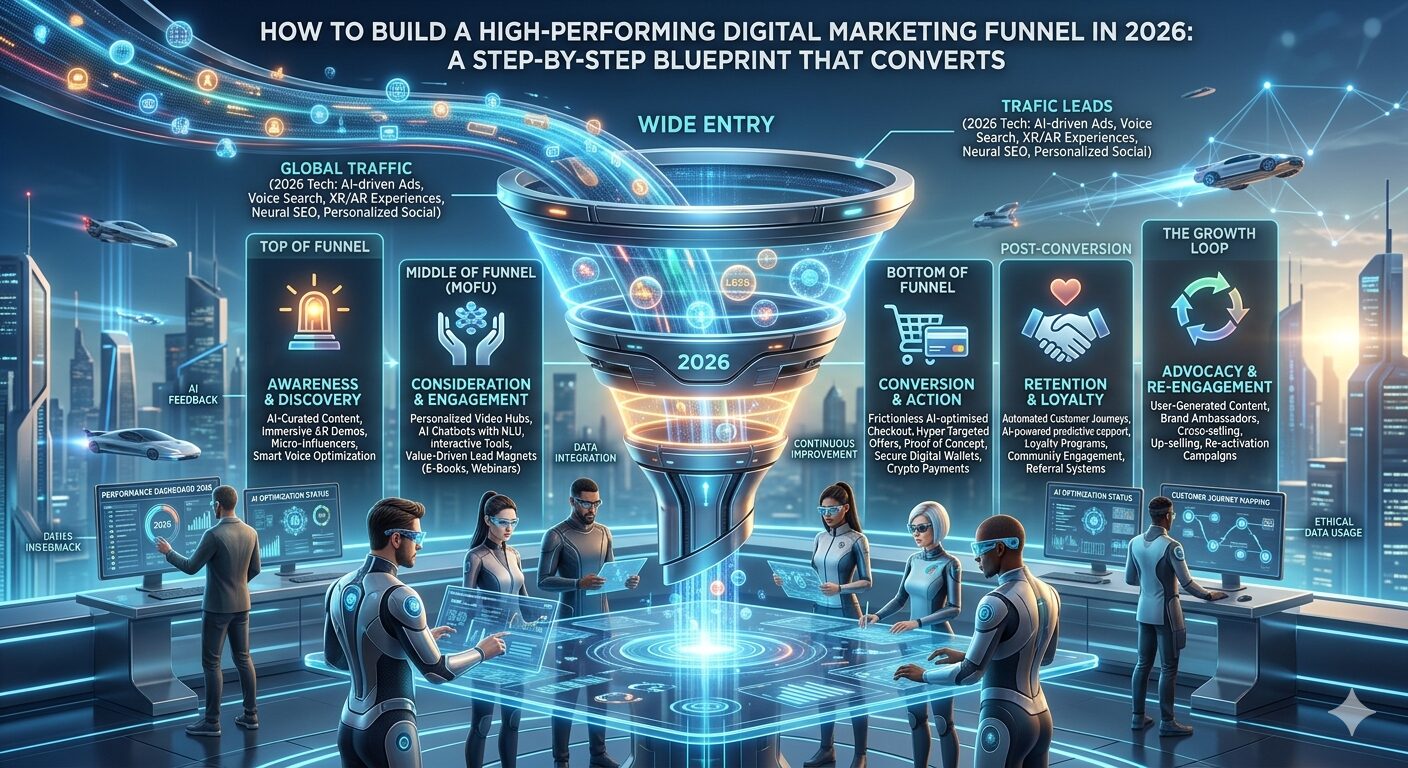
A digital marketing funnel is a structured journey that a potential customer takes — from first learning about your brand to becoming a paying customer and beyond.
It typically consists of four key stages:
- Awareness
- Interest / Consideration
- Decision / Conversion
- Retention / Advocacy
Marketing funnels matter because they allow you to:
- Map buyer behaviour
- Deliver relevant content at each stage
- Improve conversion with fewer resources
- Measure what’s working and what’s not
Rather than guessing, you can design each step of the customer journey.
2. Stage 1 — Awareness: Attracting the Right Audience
The first stage is all about visibility. You want people who fit your ideal customer profile to know your brand exists.
a. Define Your Target Audience
Before you attract anyone, clarify who you’re targeting:
- Demographics: age, location, profession
- Goals: what they want to achieve
- Challenges: what problems they face
- Behaviours: where they spend time online
This audience insight informs every next step.
b. Use Content That Educates, Not Just Promotes
Awareness content should solve a problem — not sell directly.
Examples:
- Blog posts addressing common challenges
- Educational social media posts
- Infographics that explain concepts
- Short videos with quick tips
This builds trust early.
c. SEO — Be Where People Are Searching
Optimize your content for relevant keywords so your brand shows up in search results when people are actively seeking solutions.
Tactics:
- Keyword research
- Helpful headlines
- Internal linking
- Quality content that answers specific queries
SEO builds long‑term organic traffic.
d. Paid Ads for Targeted Reach
Use paid advertising to reach your audience faster:
- Meta (Facebook/Instagram) ads
- Google Search/Display ads
- LinkedIn ads (for B2B)
Target based on interests, behaviours, job titles, and search intent.
Tip: Awareness ads should teach or entertain, not sell immediately.
3. Stage 2 — Interest / Consideration: Engage and Educate
Once people know about you, the goal is to deepen engagement. This is where you demonstrate value and position your brand as a trusted choice.
a. Create Valuable Lead Magnets
Offer something useful in exchange for contact information:
- Checklists
- Templates
- eBooks
- Industry reports
- Video training
Lead magnets help convert visitors into leads.
b. Build High‑Converting Landing Pages
Your landing pages should:
- Focus on one offer
- Have a clear call‑to‑action (CTA)
- Be visually clean and fast
- Use concise, benefit‑driven copy
The goal is opt‑ins, not sales yet.
c. Email Marketing — The Power of Nurturing
Set up automated email sequences to educate leads:
- Welcome messages
- Helpful tips
- Case studies
- Social proof
- Segmented workflows
Emails keep your brand top of mind and build trust.
d. Retargeting Ads — Stay Top of Mind
Not everyone converts on first visit. Use retargeting:
- Website visitors
- Landing page abandoners
- Lead magnet downloaders
This reinforces your brand and brings users back.
4. Stage 3 — Decision / Conversion: Turning Interest Into Action
This is where the funnel becomes a revenue‑producing engine.
a. Present Clear Offers With Strong Value Propositions
Your offer should be:
- Clear
- Valuable
- Easy to understand
- Easy to act on
Use landing pages that outline benefits, features, and a simple CTA like “Buy Now” or “Get Started.”
b. Use Social Proof to Reduce Risk
People buy based on trust. Use:
- Testimonials
- Case studies
- Reviews
- Numbers (e.g., “500+ customers served”)
This builds credibility.
c. Offer Limited‑Time Incentives
Scarcity and urgency can increase conversions:
- Time‑limited discounts
- Bonuses for early action
- Limited seat webinars
Use these tactically — but ethically.
d. Live Sales Support
For higher‑ticket offers, include:
- Chat support
- Sales calls
- Consultations
- Live demos
Helping leads overcome objections increases conversions.
5. Stage 4 — Retention / Advocacy: Keep Customers Coming Back
Getting one sale isn’t enough — repeat customers and referrals are where sustainable growth comes from.
a. Deliver Outstanding Customer Experience
After purchase:
- Thank the customer
- Provide onboarding guidance
- Ask for feedback
- Offer support proactively
Customer experience builds loyalty.
b. Upsell and Cross‑Sell Strategically
Identify complementary offers that serve your customers:
- Premium versions
- Add‑on services
- Bundles
But don’t be pushy — provide value first.
c. Encourage Referrals
Happy customers refer others. Use:
- Referral incentives
- Shareable links
- Social sharing prompts
Referrals reduce acquisition cost and improve conversion.
6. Analytics — Measure What Matters
You can’t optimize what you don’t measure.
Key Metrics by Stage
| Stage | Metrics |
|---|---|
| Awareness | Impressions, clicks, traffic |
| Interest | Leads, opt‑in rate, engagement |
| Conversion | Sales, conversion rate, cart abandonment |
| Retention | Repeat purchases, customer lifetime value |
Use tools like Google Analytics, Facebook Insights, and email platform analytics.
Funnel Visualization
Map the funnel with data to see where users drop off:
- Awareness → Interest
- Interest → Conversion
- Conversion → Retention
This helps diagnose issues and optimize performance.
7. Aligning Teams Around the Funnel
Marketing shouldn’t operate in a silo. Cross‑functional alignment matters:
a. Sales & Marketing Alignment
Ensure sales teams understand:
- Where leads came from
- What messaging resonates
- Customer objections
This improves conversion outcomes.
b. Customer Support Feedback Loop
Support teams gather insights:
- What customers ask most
- What confuses them
- What delights them
Feed these back into content, product, and funnel optimization.
8. Funnel Automation — Working Smarter Not Harder
Automation saves time and improves consistency.
a. Email Sequences
Set automated flows:
- Welcome
- Nurture
- Cart abandonment
- Post‑purchase
b. Chatbots & Messaging
Use bots to:
- Answer FAQs
- Gather leads
- Route qualified prospects
Tip: Always give an option to talk to a human.
c. Triggered Campaigns
Use behavior triggers:
- Visited pricing page → follow‑up email
- Downloaded resource → nurture drip
- Cart added → retargeting
Automation makes funnels scalable.
9. Funnel Optimization — Test, Learn, Improve
Don’t set and forget. Run systematic tests:
a. A/B Testing
Test:
- Headlines
- Landing page layouts
- CTAs
- Offers
Analyze results and iterate.
b. User Experience (UX) Testing
Heatmaps and session recordings uncover:
- Where users drop off
- What confuses them
- What converts best
Always optimize for simplicity and clarity.
10. Advanced Funnel Strategies for 2026
Digital marketing continues to evolve. Here are cutting‑edge strategies:
a. AI‑Enhanced Personalization
Use AI to tailor:
- Content recommendations
- Automated messaging
- Dynamic website content
Personalized funnels perform better.
b. Omnichannel Funnels
Don’t just funnel through one channel. Use:
- Search
- Social
- SMS
- Messaging apps
Omnichannel funnels increase reach and conversions.
c. Interactive Content Funnels
Interactive tools like:
- Quizzes
- Calculators
- Assessments
These generate engagement and qualify leads effectively.
11. Common Funnel Mistakes & How to Fix Them
a. Ignoring Mobile Experience
Mobile traffic is often the majority. Ensure:
- Fast loading
- Clear buttons
- Easy forms
Poor mobile funnels lose conversions.
b. Not Tracking Properly
Without tracking, you’re guessing. Set up:
- UTM tagging
- Goal conversions
- Event tracking
This reveals the true performance.
c. Hard‑Selling Too Early
Pushy funnels push prospects away. Educate first — sell later.
12. Funnel Case Studies — Real Examples That Work
Case Study 1: SaaS Company
A SaaS brand used:
- SEO content for awareness
- Lead magnets + webinars for interest
- Free trials + automated onboarding for conversion
- In‑app messaging for retention
Result: 40% increase in MRR in 6 months.
Case Study 2: eCommerce Brand
An online store used:
- Social ads and UGC reels for traffic
- Quiz funnels to personalize recommendations
- Cart abandonment sequences
- VIP programs for repeat customers
Result: 3× repeat purchase rate.
Conclusion — Funnel Thinking for Sustainable Growth
A high‑performing digital marketing funnel doesn’t happen by chance — it’s designed, measured, optimized, and aligned across teams. In 2026, businesses that master funnel execution outperform competitors in visibility, conversion, and customer loyalty.
If you build a funnel that:
- Attracts the right audience
- Engages with relevant value
- Converts with a clear pathway
- Retains with ongoing value delivery
…then you don’t just generate traffic — you generate growth that scales.
Start building your funnel today — and turn your digital presence into a predictable growth engine.