
Play the Long Game: Why Sustainable Strategies Create Lasting Business Success
Real business growth is rarely created by one campaign, one successful month, or one clever idea. The strongest businesses are built through clear direction, consistent execution, continuous improvement, and strategies designed to deliver value over time.
Success Is a Long-Term Game
In a fast-moving digital environment, it is easy to become focused on immediate results. Businesses want more traffic, more leads, more sales, and greater visibility as quickly as possible. Short-term wins can certainly be valuable, but they should support a larger strategy rather than replace one.
Sustainable growth comes from understanding where your business is today, deciding where you want it to go, and consistently taking the right actions to move forward.
The principle is simple:
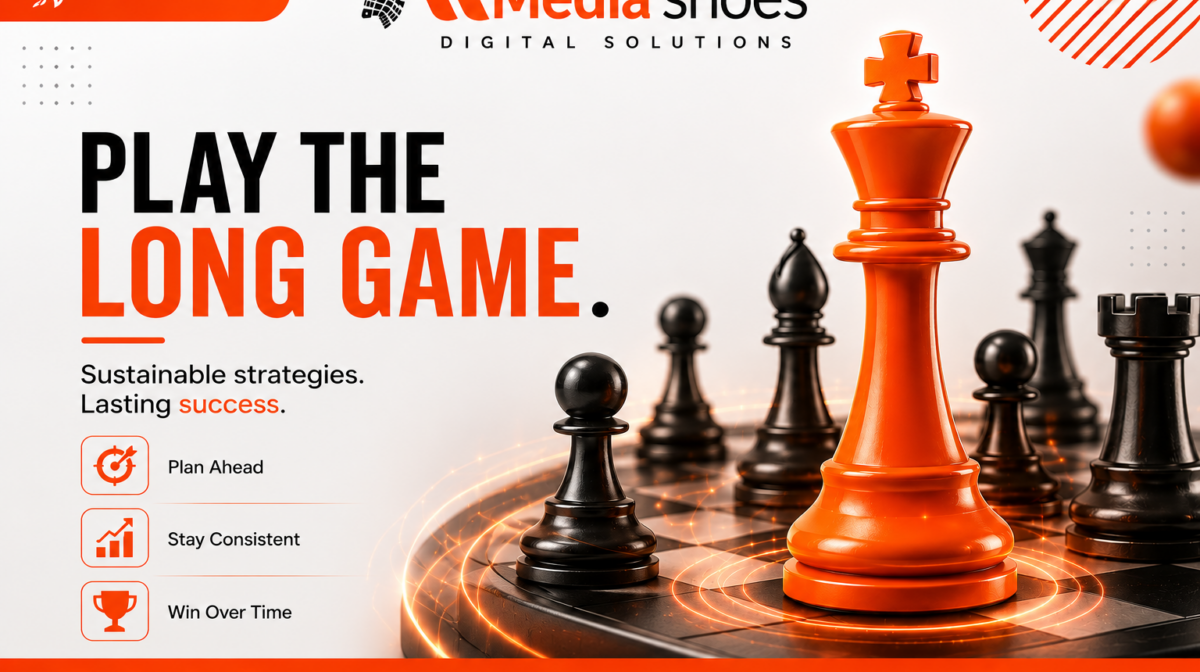
Plan ahead. Stay consistent. Improve continuously. Win over time.
1. Plan Ahead Instead of Reacting
Strong businesses do not make every decision based on what happened yesterday. They develop a clear understanding of their goals, customers, competition, opportunities, and challenges before deciding where to invest their time and resources.
A strong strategy provides direction. It helps teams understand what matters most and prevents resources from being wasted on activities that do not contribute to meaningful business objectives.
- Define clear and measurable business goals.
- Understand your ideal customers and their needs.
- Identify the marketing channels that offer genuine potential.
- Create realistic short-, medium-, and long-term priorities.
- Measure progress and adjust the strategy when necessary.
2. Consistency Builds Momentum
A great strategy becomes valuable only when it is executed consistently. Whether you are improving SEO, publishing content, developing your brand, running digital campaigns, or strengthening customer relationships, consistency compounds.
One useful article may generate some attention. A well-planned library of valuable content can establish authority. One successful campaign may produce leads. A continuously optimized marketing system can create a dependable source of opportunities.
This is why sustainable growth often looks slower at the beginning. The foundations are being built before the full results become visible.
3. Build Systems, Not Just Campaigns
Individual campaigns have starting and finishing points. Strong digital growth systems continue creating value long after individual activities have ended.
Your website, search visibility, content library, email audience, analytics, conversion process, customer experience, and brand reputation should work together rather than operate as disconnected pieces.
Think Beyond the Next Campaign
Instead of asking only, “What can generate results this month?” ask, “What can we build today that will continue creating opportunities six or twelve months from now?”
4. Use Data to Keep Improving
Playing the long game does not mean following the same strategy forever. Sustainable strategies evolve. Businesses should continually review performance and use real data to understand what is working, what is underperforming, and where new opportunities exist.
Website traffic, search rankings, enquiries, conversion rates, customer acquisition costs, engagement, and revenue can all provide valuable insights. The objective is not simply to collect numbers but to use them to make better decisions.
5. Focus on Sustainable Growth
Rapid growth can look impressive, but growth that cannot be maintained may create more problems than opportunities. A sustainable strategy considers whether the business has the systems, people, technology, processes, and resources required to support expansion.
The objective should not simply be to become bigger. It should be to become stronger, more efficient, more visible, and better positioned for future opportunities.
6. Build a Brand People Remember
Long-term marketing is also about building trust. Customers are more likely to choose businesses they recognise, understand, and believe can consistently deliver value.
Consistent branding, useful content, strong customer experiences, professional communication, and a clear market position gradually create credibility. That credibility becomes an asset that competitors cannot easily reproduce overnight.
7. Keep Adapting Without Losing Direction
Markets change. Technology evolves. Customer expectations shift. New competitors appear and new opportunities emerge. Long-term thinking does not mean refusing to change; it means adapting while keeping your wider objectives in focus.
Businesses that regularly evaluate their strategy can respond to change without constantly abandoning their direction for the latest trend.
What the Long Game Looks Like
| Short-Term Thinking | Long-Term Thinking |
|---|---|
| Chasing quick traffic | Building sustainable visibility |
| One-off campaigns | Connected growth systems |
| Following every trend | Following a clear strategy |
| Guessing what works | Using data to improve |
| Immediate results only | Compounding business value |
Final Thoughts
The businesses that create lasting success are rarely those searching constantly for shortcuts. They are the businesses willing to build strong foundations, execute consistently, learn from performance, and improve their strategy over time.
There will always be new platforms, new technologies, and new marketing trends. But the fundamentals remain powerful: understand your audience, create genuine value, measure performance, make informed decisions, and keep moving toward a clear objective.
Plan ahead. Stay consistent. Keep improving. Play the long game.
Ready to Build Sustainable Digital Growth?
Media Shoes helps businesses develop smarter digital strategies designed for meaningful, measurable and lasting growth. Plan Ahead • Stay Consistent • Win Over Time